
Renewable Energy School · Course 5
Land, Leases and Livelihoods
72 minutes · 4 modules of 18 minutes · Free
What this course is about
Wind and solar projects need large areas of land for decades. This course helps landowners, farm dwellers and communities on communal land understand their rights, how developers secure land, and how to negotiate fairly and protect livelihoods.
Who it is for
Landowners, farm dwellers and farm workers, members of communities on communal land, traditional and civic leaders, and project staff responsible for land access.
What you will be able to do
- Explain the main kinds of land rights in rural South Africa, including informal rights.
- Describe how developers secure land through options, leases and servitudes, and why independent advice matters.
- Identify the protections available to farm dwellers and communities on communal land, including for graves.
- Apply fair negotiation practices that protect livelihoods.
Preview: the first two minutes
Module 1 · Introduction · 2 min
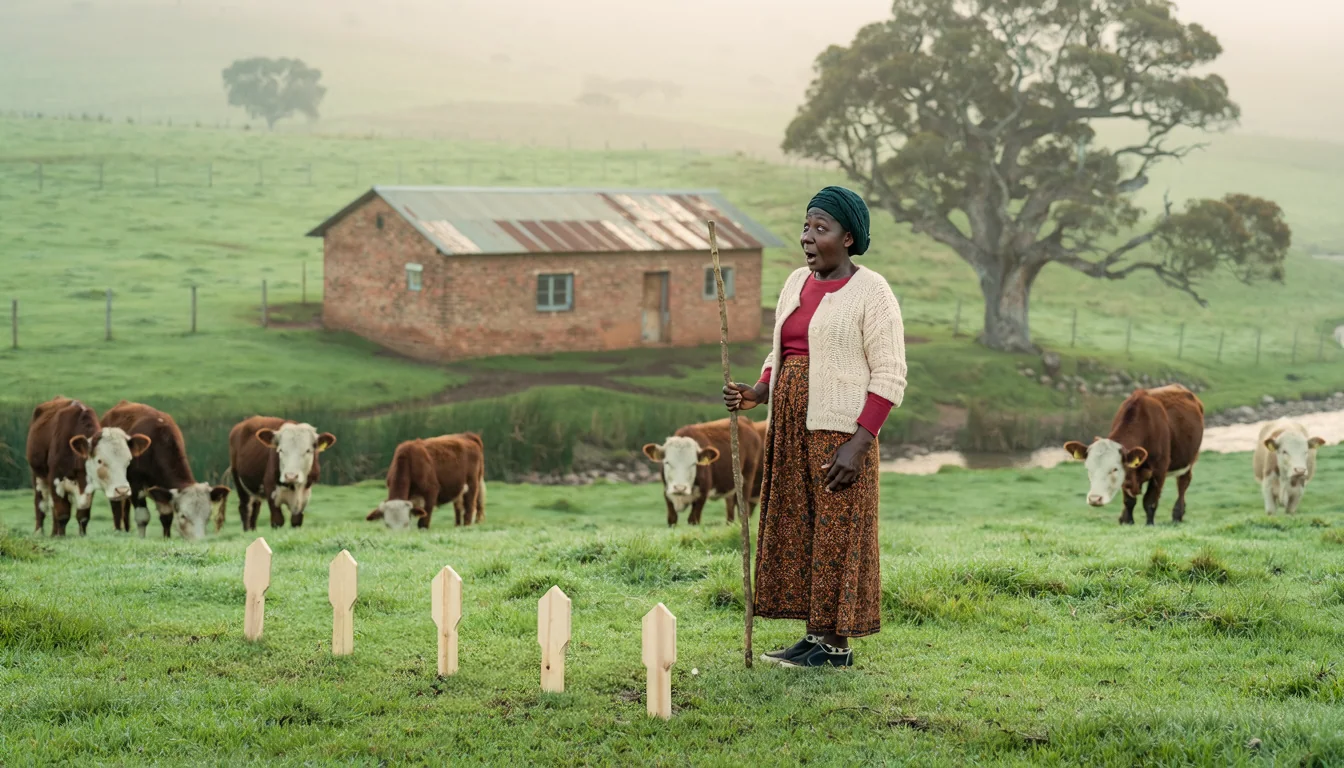
Illustrated scene (fictional, Moya): a surveyor's pegs appear on grazing land overnight. Three people claim the land is theirs to discuss: a title-deed farmer, a family that has lived there for generations without a title deed, and a headman for communal land nearby.
Modules
Module 1 · 18 min
Land rights in rural South Africa
Explain the main kinds of land rights in rural South Africa, including informal rights.

Module 2 · 18 min
Leases and servitudes
Describe how developers secure land through options, leases and servitudes, and why independent advice matters.
Module 3 · 18 min
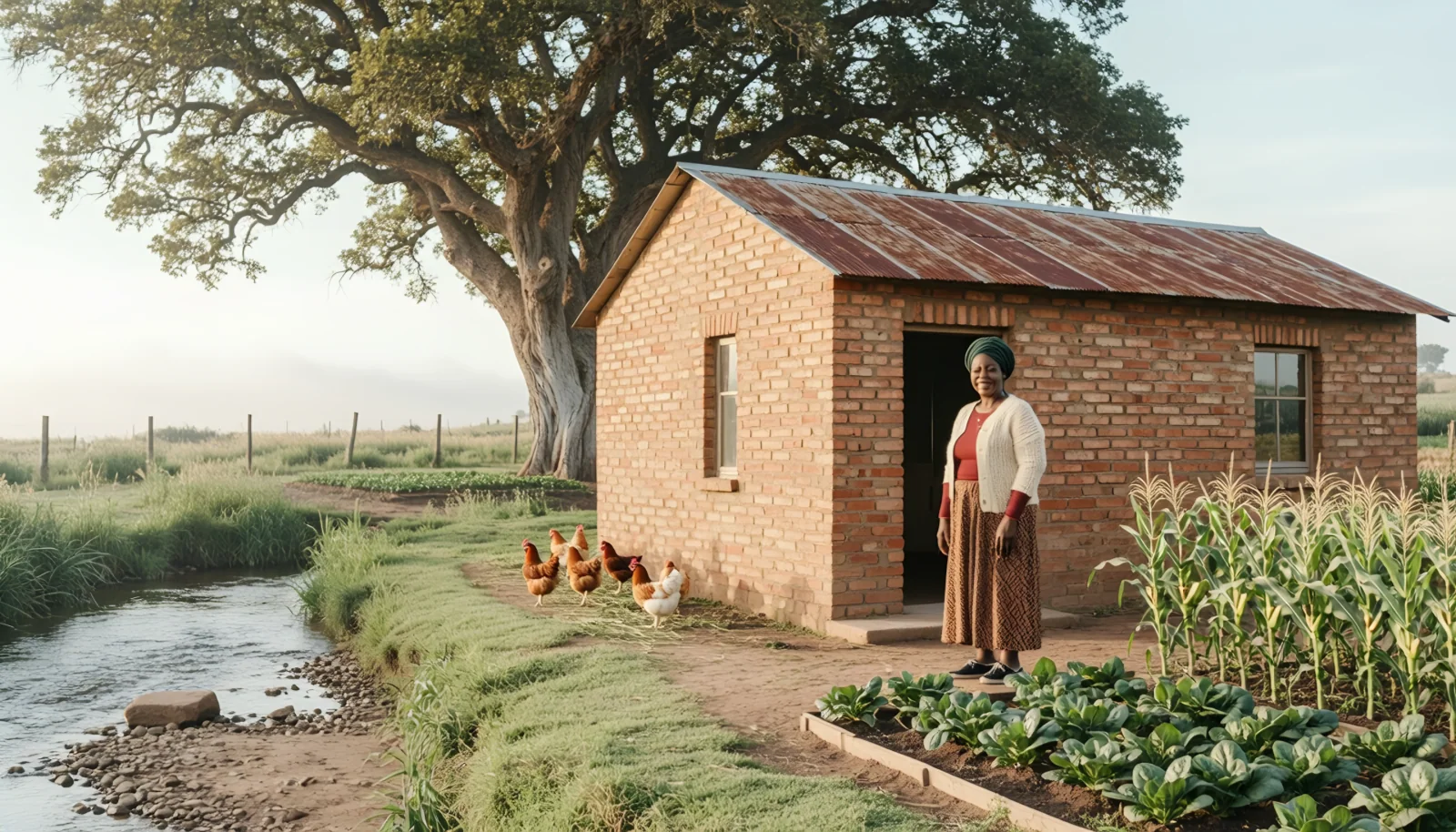
Farm dwellers and communal land
Identify the protections available to farm dwellers and communities on communal land, including for graves.
Module 4 · 18 min
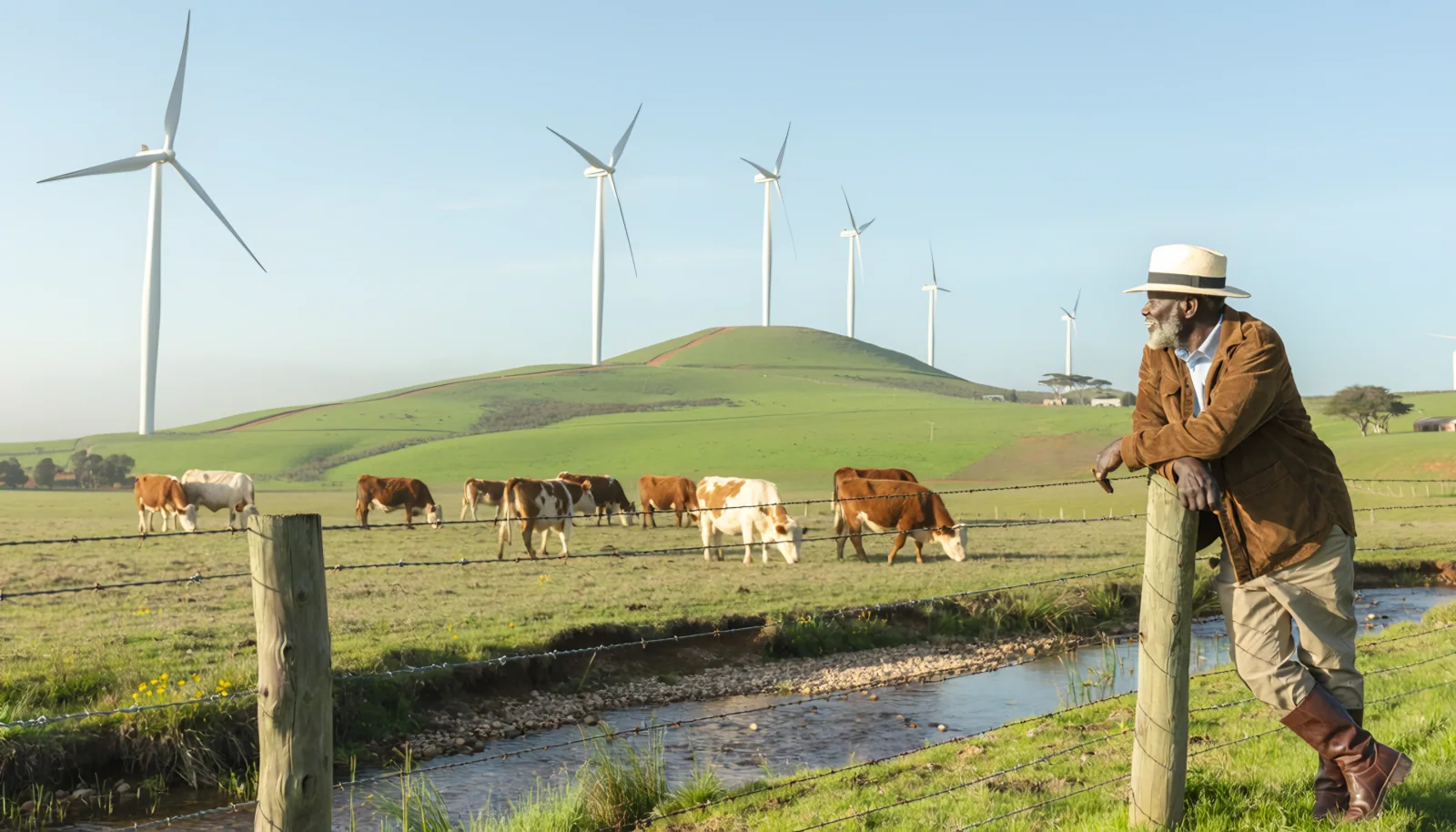
Negotiating fairly
Apply fair negotiation practices that protect livelihoods.
Go deeper
- Questions to ask before signing a land agreement (worked through on screen in Module 2, Unit 2.2, and Module 4, Unit 4.2).
- IFC Performance Standards 1, 5 and 8.