
Renewable Energy School · Course 4
Owning Together (Energy): Community Trusts
72 minutes · 4 modules of 18 minutes · Free
What this course is about
Many renewable energy projects in South Africa have a community trust as a part-owner. This course explains why, how the community's stake is paid for, why benefits can take years to arrive, and how trustees and communities can govern a trust well and hold it to account.
Who it is for
Community members near wind, solar and storage projects, community and company trustees, beneficiaries, ward committee members, and project staff who work with trusts.
What you will be able to do
- Explain why renewable energy projects have community owners.
- Describe how a community stake is financed and why dividends can arrive late.
- Identify the main duties of trustees and the basics of spending trust money well.
- Use accountability tools to raise concerns and resolve disputes about a trust.
Preview: the first two minutes
Module 1 · Introduction · 2 min
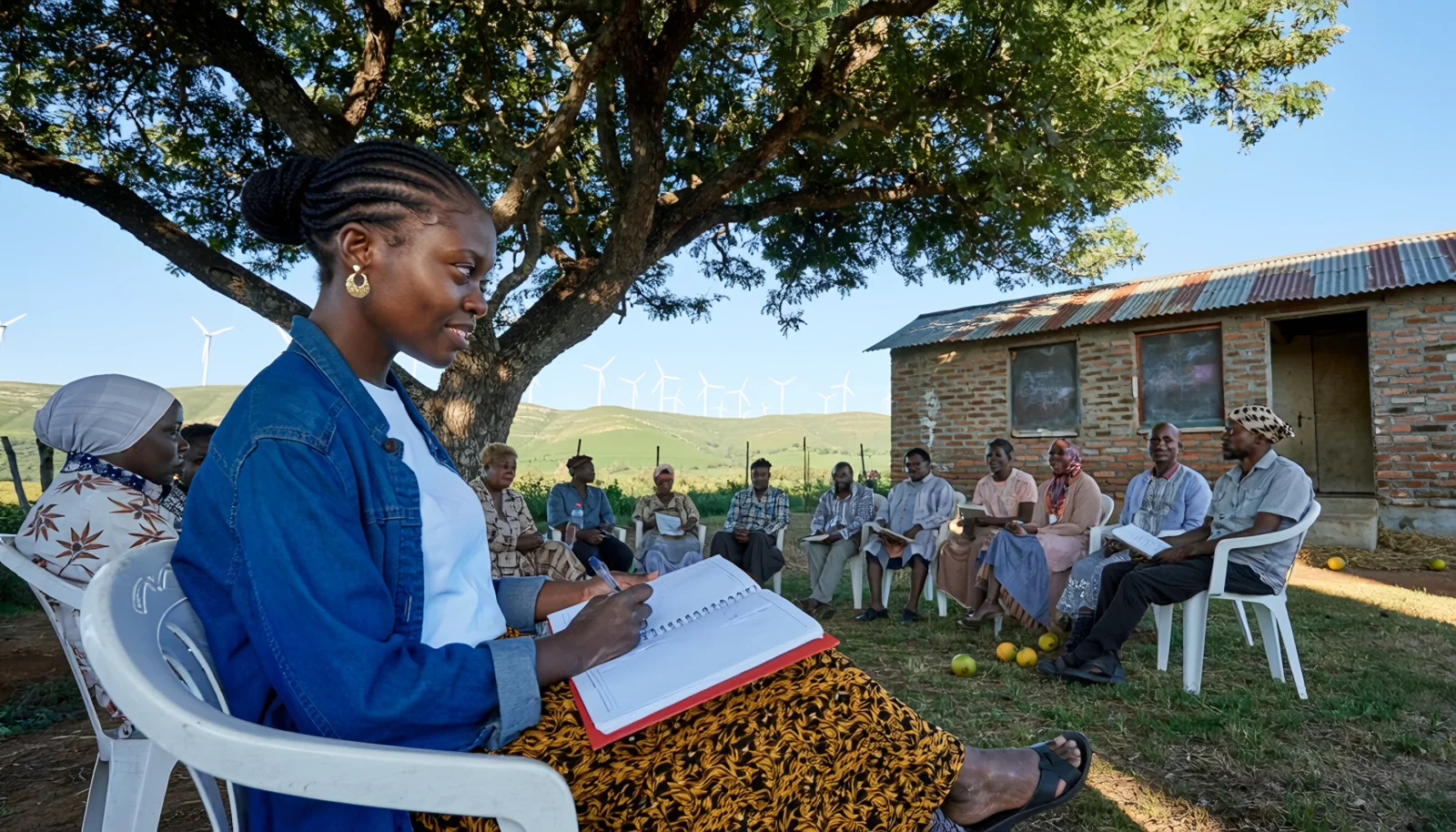
Animated scene (fictional, Moya): at a village meeting, an elder asks, "They say we own part of the wind farm. So where is our money?" A young trustee does not know how to answer.
Modules
Module 1 · 18 min
Why projects have community owners
Explain why renewable energy projects have community owners.
Module 2 · 18 min
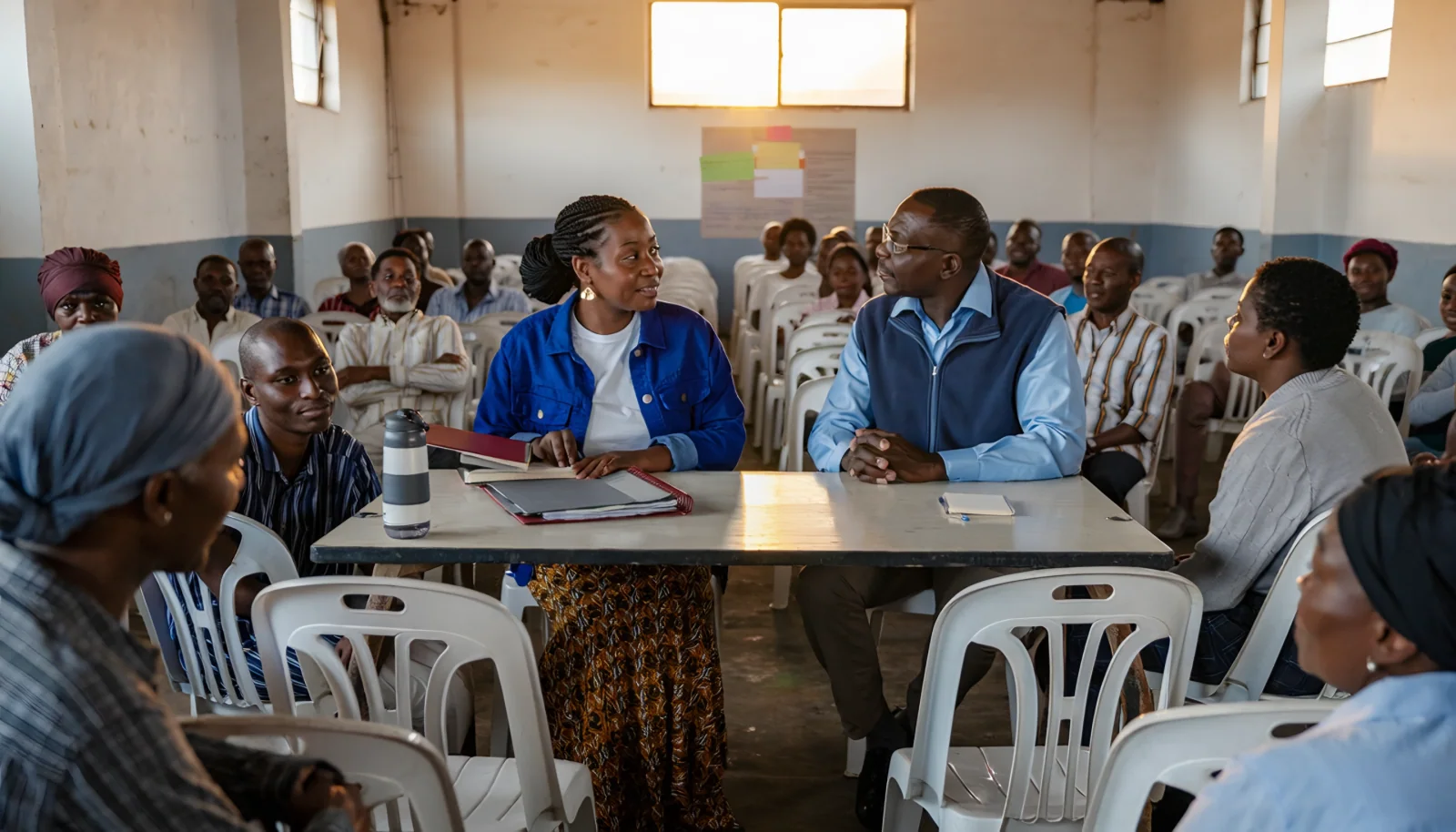
Debt, and why dividends arrive late
Describe how a community stake is financed and why dividends can arrive late.

Module 3 · 18 min
Trustees' duties and spending well
Identify the main duties of trustees and the basics of spending trust money well.
Module 4 · 18 min
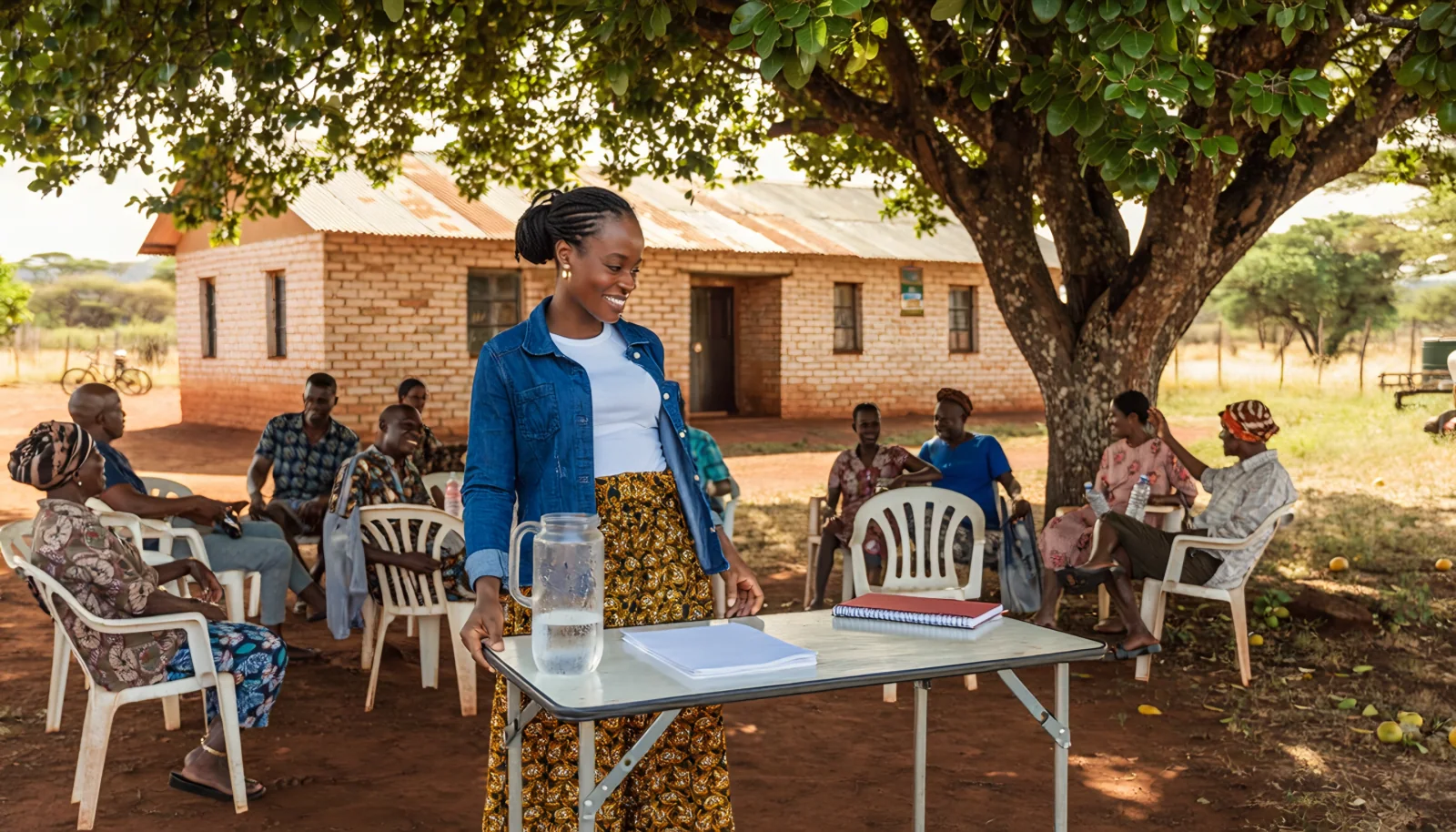
Accountability and disputes
Use accountability tools to raise concerns and resolve disputes about a trust.
Go deeper
- Template: questions to ask your trust.
- Template: a simple trust report-back agenda.
- Mining School course 9, Owning Together (shared trust law content).