

Leadership School · Course 2
Introduction to Convening Energy Dialogue
72 minutes · 4 modules of 18 minutes · Free
What this course is about
This course introduces the basics of convening fair dialogue between renewable energy projects, communities and government. It builds awareness and confidence. It does not certify anyone as a facilitator or mediator.
Who it is for
Community leaders, trust members, project community liaison officers, municipal officials and civil society practitioners who bring people together around energy projects.
What you will be able to do
- Explain what impartiality means for a convenor and recognise conflicts of interest.
- Map a conflict around an energy project: the parties, their interests and the history.
- Use basic game theory ideas to understand why parties cooperate or compete.
- Outline a fair dialogue process with a clear mandate, ground rules and follow-up.
Preview: the first two minutes
Module 1 · Introduction · 2 min
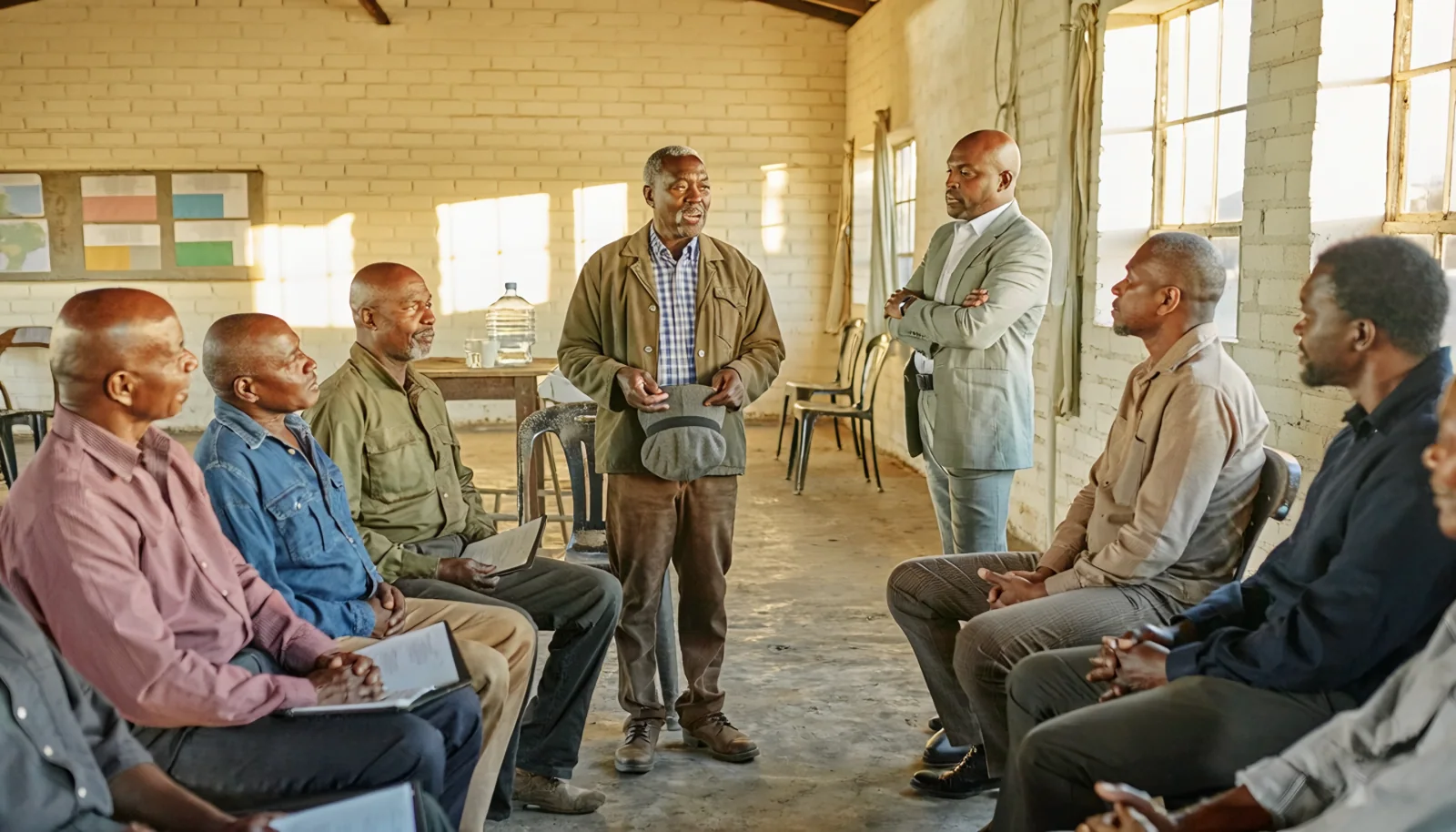
Scene (fictional, Moya): a Moya convenor is asked to chair a meeting about trust spending. Her brother is a trustee. Should she chair?
Modules
Module 1 · 18 min
Impartiality and ethics
Explain what impartiality means for a convenor and recognise conflicts of interest.
Module 2 · 18 min
Reading a conflict in energy projects
Map a conflict around an energy project: the parties, their interests and the history.

Module 3 · 18 min
Strategy at the table
Use basic game theory ideas to understand why parties cooperate or compete.

Module 4 · 18 min
Designing a fair dialogue
Outline a fair dialogue process with a clear mandate, ground rules and follow-up.
Go deeper
- Process plan outline (worked through on screen in Module 4).
- Reading: research on renewables-linked community trusts (see Sources).
Sources
- https://www.engineeringnews.co.za/article/long-delay-in-dividend-flows-to-renewables-linked-community-trusts-impeding-effectiveness-2021-05-06
- https://www.dailymaverick.co.za/article/2025-03-26-community-trusts-in-sa-renewable-energy-programme-pitfalls-and-potential
- https://www.ohchr.org/sites/default/files/documents/publications/guidingprinciplesbusinesshr_en.pdf