

Mining School · Course 6
Having a Say: Consultation, Information and Accountability
72 minutes · 4 modules of 18 minutes · Free
What this course is about
People affected by mining have a right to be consulted, to get information and to raise concerns. This course explains what meaningful consultation is, who speaks for a community, how to get information, and how to raise and escalate a concern through the proper channels.
Who it is for
Community members, ward committee members, traditional council members, civic and youth organisations, mine employees and contractors, and municipal officials who take part in consultation with mines.
What you will be able to do
- Explain what makes consultation meaningful under South African law.
- Identify who speaks for a community and how to make representation fair and inclusive.
- Use the right to information, including requests under PAIA and complaints to the Information Regulator.
- Raise a grievance and follow the escalation ladder in the right order.
Preview: the first two minutes
Module 1 · Introduction · 2 min
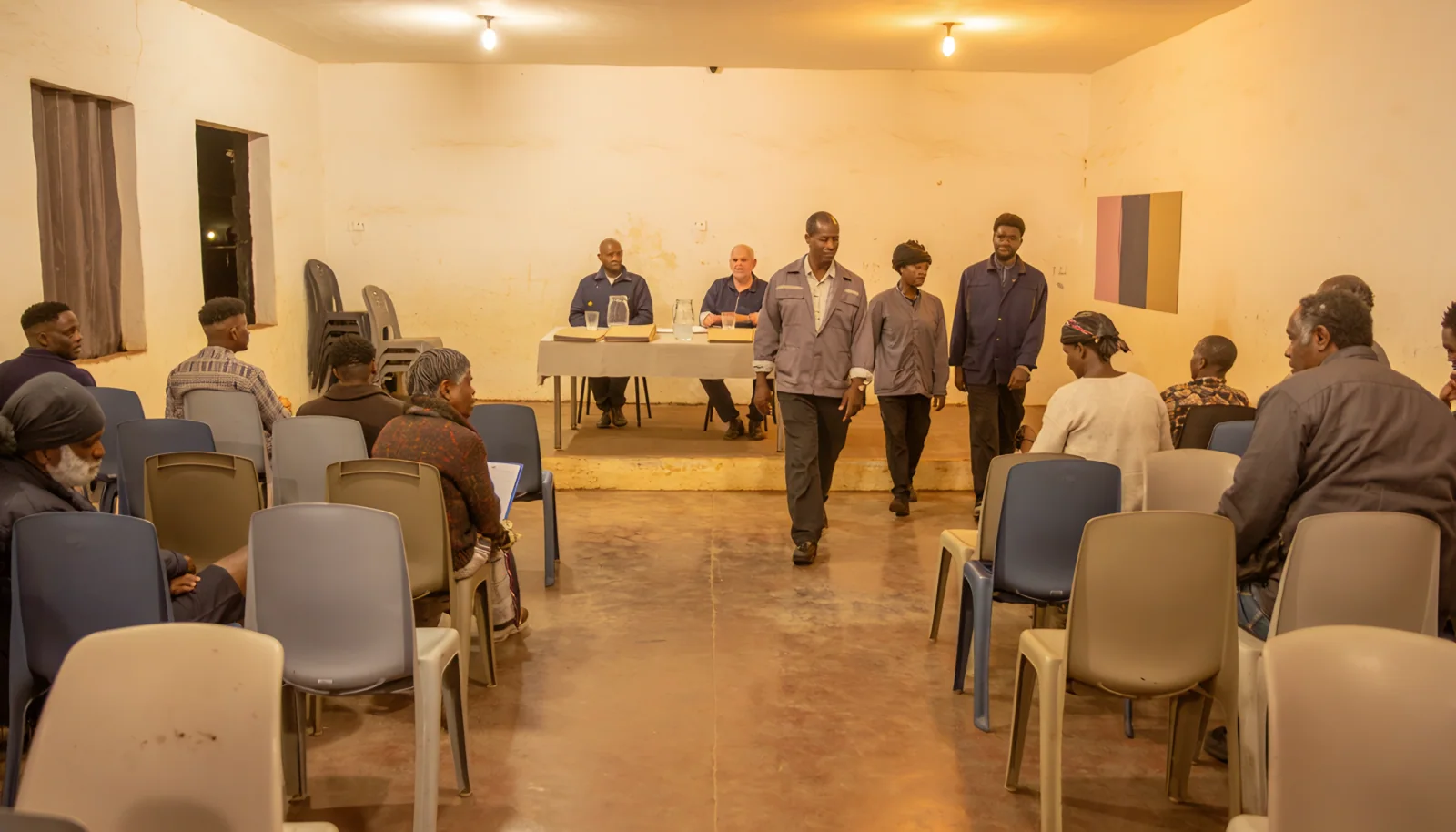
Animated scene (fictional, Pula village): a notice about a mine meeting is pinned at the clinic two days before the meeting, in English only. Thandi, a ward committee member, asks: "Is this consultation, or just an announcement?"
Modules
Module 1 · 18 min
Meaningful consultation
Explain what makes consultation meaningful under South African law.
Module 2 · 18 min
Who speaks for the community
Identify who speaks for a community and how to make representation fair and inclusive.

Module 3 · 18 min
The right to know
Use the right to information, including PAIA requests and complaints to the Information Regulator.

Module 4 · 18 min
Grievances and escalation
Raise a grievance and follow the escalation ladder in the right order.
Go deeper
- Mining School course 5, Social and Labour Plans, for monitoring SLP delivery.
- PAIA request form and guidance from the Information Regulator.
- OECD 2017 guidance (link above).
Sources
- https://webberwentzel.com:443/News/Pages/mprda-regulations-widen-the-obligation-to-consult.aspx
- https://lawlibrary.org.za/akn/za/judgment/zacc/2018/41
- https://www.oecd.org/en/publications/2017/02/oecd-due-diligence-guidance-for-meaningful-stakeholder-engagement-in-the-extractive-sector_g1g65995.html
- https://www.icmm.com/en-gb/our-principles/mining-principles/mining-principles
- https://www.gov.za/news/media-statements/minister-velenkosini-hlabisa-welcomes-constitutional-court-ruling-granting
- https://www.mondaq.com/southafrica/contracts-and-commercial-law/1797238/landmark-ruling-for-private-bodies-under-paia-information-regulators-enforcement-notice-against-mining-house
- https://www.acts.co.za/mineral-and-petroleum-resources/96_internal_appeal_process_and_access_to_courts
- https://www.icmm.com/en-gb/news/2019/resolving-community-concerns-and-grievances